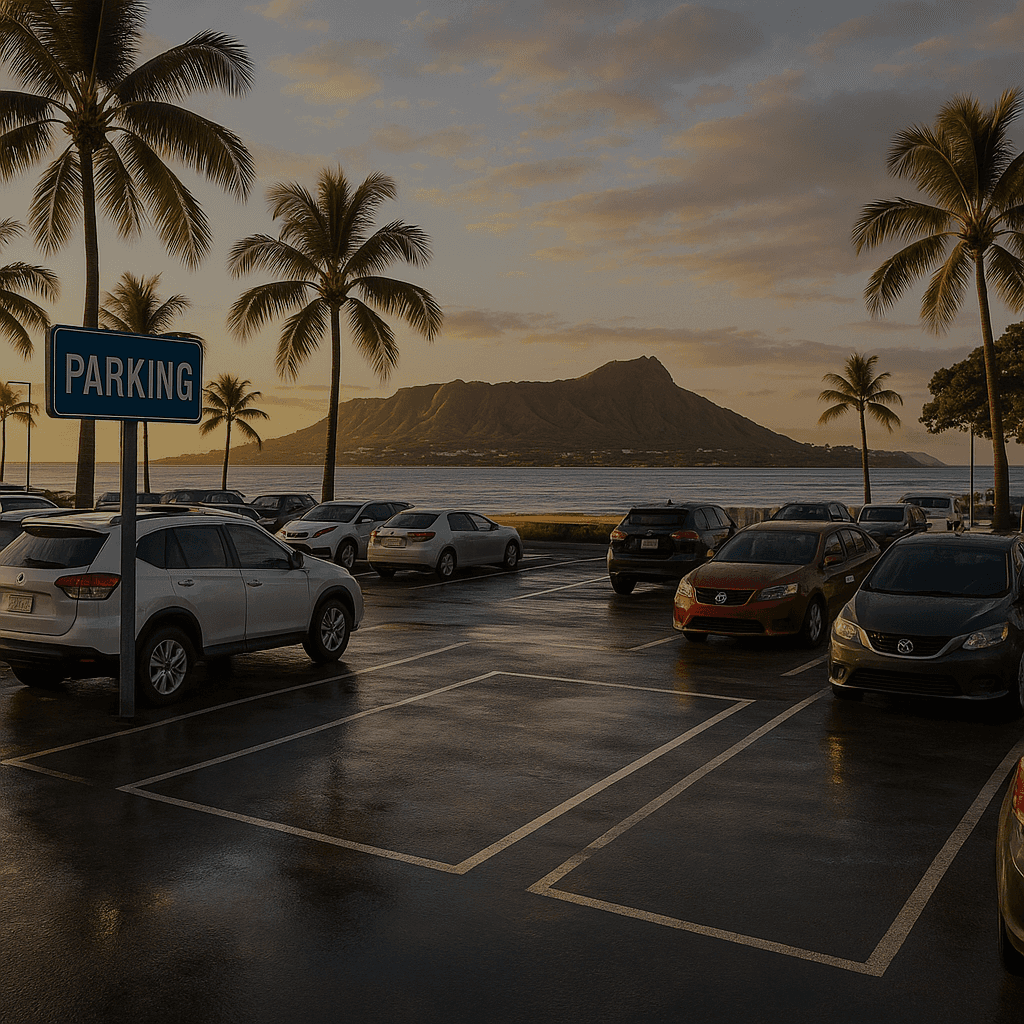
Parking in Waikīkī adds up fast, so the first move is learning QR parking—scan the code on the lot sign, pay by plate, get a timed receipt, and skip jammed kiosks. It’s faster at busy hours and sends reminders before time runs out, which is clutch if you’re on the beach or at dinner. Bring your plate number and a charged phone; most systems let you extend from your screen without walking back. Once that’s clear, we can weigh hotel garages versus street and lot options.
Hotel garages are convenient but typically sit in the $40–$60/night range, and the math stings on multi-night stays. Garages still make sense for mobility needs, heavy gear, or stormy nights when you want covered entry. If you won’t be moving the car much, it’s smarter to blend free or low-cost daytime options with a short evening garage window. That sets up your first free play along the canal without committing to resort rates.
The free option locals actually use is Ala Wai Boulevard—the longest stretch of free curbside parking in Waikīkī. Aim for mornings for easier wins, with another turnover mid-afternoon as beachgoers peel out. Read every street-cleaning sign; rules shift block-to-block and tows start on the minute. If those curb spots are tight, it’s time to pivot to a predictable lot that stays close to the sand.
When you want predictable and close, the Honolulu Zoo / Waikīkī Shell lots at the Diamond Head end are simple, stroller-friendly, and near the beach paths. Paid hours are posted clearly; arrive earlier on event nights when capacity tightens. It’s an easy unload for families or coolers, and many stalls support QR/tap so you’re not dealing with coins. From there, your next best value lives on the west side by the lagoon.
By Ala Wai Boat Harbor near Hilton Hawaiian Village, day-max rates are often lower than hotel garages and ideal for full beach days. Pick sections with clearer lighting and sightlines, and don’t leave valuables visible. It’s a short, flat walk to the lagoon and beach paths, which keeps returns simple with kids or boards. With your core options set, timing becomes the difference between “good” and “great” spend.
Timing matters more than people think—early-bird specials and off-peak evening rates can knock real dollars off your total. Read the placards: some garages drop prices after peak hours, and height clearance varies if you’re in an SUV or van. Street rules are strict: loading zones, hotel frontages, and permit-only stalls get ticketed quickly. Staying ahead of event surges is where alerts help most.
If you’ll be here a few days (or you’re local), subscribe for lot status and event-day alerts so parades, concerts, and closures don’t catch you circling. We send short, useful notes—cleaning windows, known closures, and which zones are filling first. It’s a quick way to decide “canal, zoo, or harbor” before you even leave the room. Once alerts are set, building a daily plan is just plug-and-play.
Putting it together looks like this: Ala Wai in the morning for free curb time, Zoo/Shell for gear-heavy beach sessions, harbor value on west-side days, and a nearby garage for late dinners. Keep one backup per side of town so you never feel stuck, and set a reminder for your meter or QR window. Do that, and parking becomes a calm step—never the main event. The only thing left is locking exact blocks and entrances.
When you’re ready to dial in blocks, entrances, rates, cleaning windows, and QR-ready spots, grab the Waikīkī Parking Map and go straight from plan to parked. It shows where free really works, which lots run early-bird, and the safest, shortest walks to the beach from each zone. Download once, keep it on your phone, and stop guessing at the curb.